
PAIN TREATMENT
Can massage therapy successfully treat injuries and/or chronic pain?
Are you dealing with an injury, or chronic pain, and wondering if massage therapy can help? Many types of injuries and chronic pain can be successfully treated and resolved with massage therapy, including most cases of low back pain, neck pain, tendon injuries, and injuries at various joints throughout the body. However, while traditional massage techniques (such as relaxation/Swedish, deep tissue, standard sports massage techniques, etc.) can help prevent injury, they are not usually the most effective treatment option once an injury has occurred. Treatment work usually requires a more nuanced knowledge of hands-on anatomy, specialized techniques, and multiple sessions to optimize your body's innate healing response until it reaches completion.
Many practitioners who specialize in pain treatment focus on alignment work, which aims to ease dysfunctional tension patterns that cause excessive wear-and-tear within the body. This type of work can be very beneficial for treating (and preventing) a great variety of painful conditions. However, I approach pain treatment from a different angle. I've found friction therapy, an orthopedic massage technique for treating dysfunctional scar tissue, to be quite effective at helping most clients recover successfully from a great range of injuries and chronic pain. Friction therapy aims to influence the quality of the scar tissue your body produces as part of its healing response to injury - resulting in stronger, more pliable scar tissue that is less likely to restrict movement, or tear repetitively under load. Clients can maximize the benefits of friction therapy by engaging in injury-specific therapeutic movements between sessions.
For the majority, a course of friction therapy - ideally, combined with therapeutic movement - is likely to successfully resolve their injuries and chronic pain. Friction therapy can successfully treat many conditions that might otherwise also respond well to alignment work, but it can be particularly helpful when alignment work alone hasn’t resolved an issue, or if an injury did not develop through an alignment issue in the first place. (And occasionally, some clients do best when they combine friction therapy with other modalities, such as alignment work, acupuncture, chiropractic, or proliferant injection therapy.)
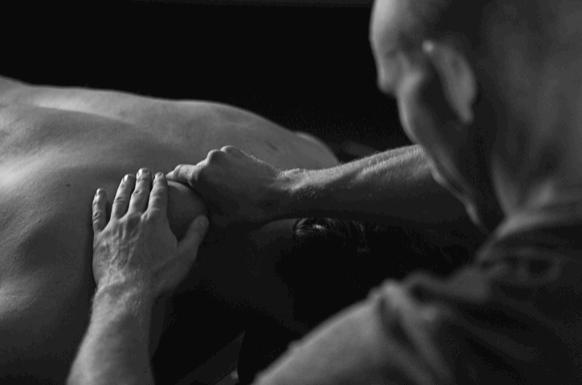
How do we determine the cause of your pain? Is imaging enough?
Ideally, any pain treatment should be preceded by a thorough physical assessment, performed by an experienced orthopedic practitioner, to determine which anatomical structure(s) might be injured. (And of course, it's always wise to consult a physician in order to rule out any possible non-orthopedic causes of pain.) When troubleshooting musculoskeletal pain, imaging can be helpful in addition to a physical assessment, but there's a great deal that it might not typically reveal on its own. For example, micro-tears in soft tissue; or ligament laxity, which doesn't show up in static imaging. A physical assessment helps shine a light on the problem before we set out to fix it - rather than fumbling around in the dark and hoping for the best. In fact, it helps us determine whether massage therapy is even an appropriate modality for the issue at hand.
I have been studying orthopedic massage techniques since 2019, and in many cases, am able to perform the necessary assessments to guide our work together. However, sometimes I recommend that clients schedule an assessment with one of the more advanced practitioners whose work I personally trust before we begin treatment. In most cases, a thorough, skillful assessment should indicate exactly which structure(s) within your body is (or are) injured. Be wary of treatments based on vague-sounding assessments, which can compromise recovery time and treatment outcome. (For example, clients with shoulder pain are often told by their providers that they have a 'rotator cuff injury', or alternatively, 'impingement syndrome'. But, impingement of what? And the rotator cuff is a group of four distinct muscles - a 'rotator cuff injury' could mean an injury to any one (or more) of these four different muscles; hardly the type of clarity required to plan focused treatment.) Starting off with a clear idea of which structures are injured helps us make your treatment more targeted, more effective, and more cost-effective in the long run.
Of course, getting an assessment is entirely optional, and some clients do opt out. In such cases, we rely more on the process of elimination to inform our work as we go from from appointment to appointment.
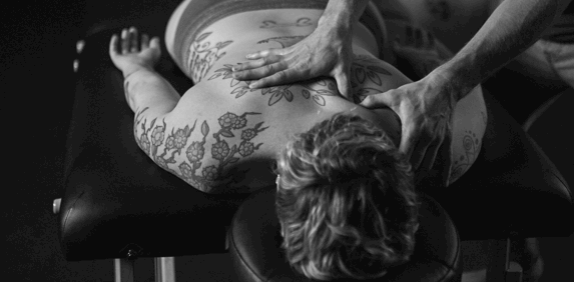
What causes pain, and how can we treat pain with friction therapy?
Most, though not all, cases of musculoskeletal pain result from improper formation of scar tissue following soft tissue injuries. Pain that arises from this phenomenon is the type I'm able to work with. (Physical assessments help rule out other potential issues, such as joint deterioration, bursitis, nerve root compression, etc., which cannot be treated with massage therapy.)
Whether from overuse (due to alignment issues, repetitive activity, or hypermobility) or from acute injury, soft tissue injuries are essentially lesions that have formed within muscles, tendons, ligaments, or fascia. Your body attempts to heal such injuries by producing scar tissue, and whenever the formation of this tissue is compromised, we end up with pain and/or limitation of movement. Most of the therapeutic work I do involves locating the relevant dysfunctional scar tissue and treating it with a technique called cross-fiber friction, or friction therapy, and occasionally also myofascial release.
Dysfunctional scar tissue in injured ligaments, tendons, and muscles can cause pain either locally, such as with a chronically sprained ankle; or it can cause referred pain, which is pain felt some distance away from its source - for example, when a soft tissue injury in the low back causes pain to be felt down the leg. Though many experience it, most people are are unfamiliar with the concept of referred pain, and often assume the referred pain they experience to be nerve pain. Ironically, incidents of nerve pain occur far less frequently than referred pain.
Targeted cross-fiber friction gradually eliminates dysfunctional, painful scar tissue, and also stimulates a renewed healing response in chronically injured tissue, giving your body a second chance at healing. Friction therapy streamlines and optimizes the body’s natural healing process, which helps chronic injuries resolve, even after years or decades of pain, and helps prevent acute injuries from becoming chronic. It all comes down to pinpointing the dysfunctional scar tissue, and targeting the area with friction therapy consistently until the body is able to complete its healing process.
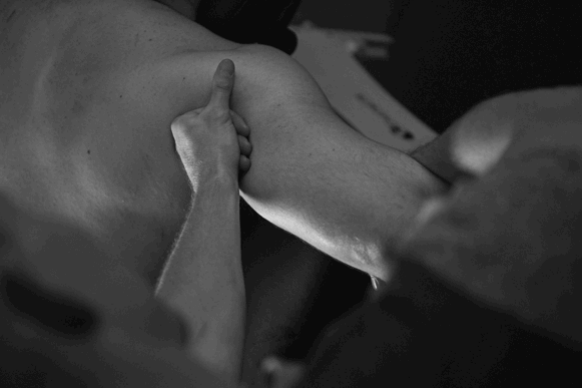
What is it like to receive cross-fiber friction therapy?
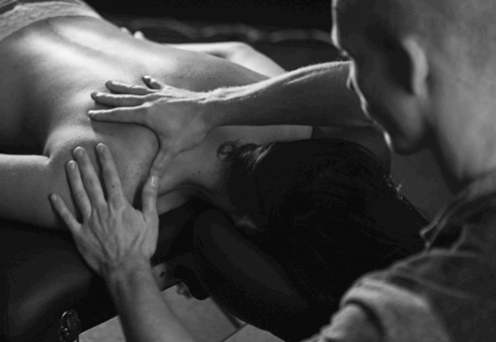
Friction therapy is somewhat different from traditional massage therapy. Because we're not just doing broad-strokes relaxation work, and because I can't feel micro tears in soft tissue the way I'm able to feel muscle tension, it requires more communication between practitioner and client along the way - especially since we'll be working in areas that are likely to be sensitive. While I manually examine all the areas suspected of injury, you’ll provide ongoing feedback about which ones feel sore to the touch, allowing us to locate and confirm injured areas as a team. I’ll then work on each injured area for a couple minutes at a time, maintaining a pressure that feels tolerable to you. We aim to sustain a level of sensation that is just mildly annoying - not neutral, and not painful. This work does not need to be painful to be successful. I regularly encourage clients to let me know if they need lighter pressure, or if they need a break. We always want to keep you in the driver's seat, and to keep the sensation predictable and tolerable.
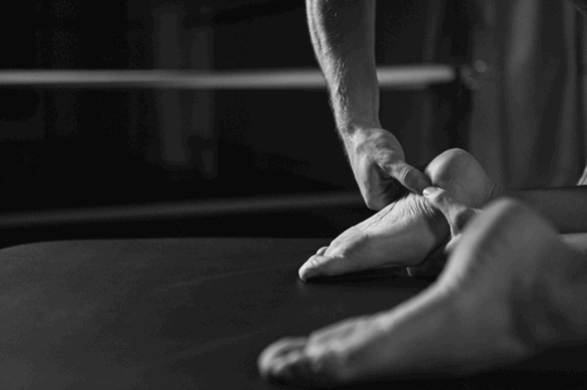
How many sessions does it take?
Some clients notice signs of improvement after a single session, while others need a few sessions before they begin to notice any change. Once in a while, clients experience lasting change with just a session or two, though most need a period of ongoing, regular sessions before their pain resolves, and they are able to conclude treatment without the likelihood of recurrance. The idea is to keep pace with the body’s scar tissue formation, and continue treating your injury until it heals completely - rather than just providing occasional relief with sporadic, infrequent bodywork. Typically, recent injuries take about 4-6 weeks of regular treatment (starting twice weekly, then tapering off) to yield significant improvement. Long-standing injuries typically require 8-12 weeks to yield significant improvement. Treatment might continue for a while beyond the 6 or 12 week mark as needed, but usually at reduced frequency. Factors that can influence recovery time include the age of the injury, likelihood of repeated re-injury, and the client’s general health. Weekly treatments at the outset, rather than twice weekly, can still be helpful in many cases; however, this significantly extends recovery period and the required treatment duration, and often also the number of sessions required overall. Usually, the sooner treatment begins, and the more regular it is at the outset - and the more committed clients are to doing therapeutic movements in-between sessions while avoiding activities likely to cause reinjury - the quicker they see results.
It is also worth noting that friction therapy sessions do not necessarily require long appointments. It all depends on how many injured sites we identify; some clients need extensive work, in which case an hour-long appointment makes sense at each sitting. Many just have one, two, or a handful of injured sites, which we can easily treat in a series of half-hour appointments (or shorter, if needed). Some opt for longer appointments regardless, in order to combine friction therapy with wellness massage.
Feel free to schedule a no-obligation phone or Zoom consultation with me if you have any questions:
PAINT TREATMENT REVIEWS
I started seeing Leo for cross-fiber friction therapy to treat lingering, years-old low back pain that was resistant to other treatments. His examination and treatment were incredibly thorough and effective, and he's helped me get relief from the pain. He also does a great job of treating more acute areas of tension and soreness, as well as therapy for general relaxation and stress relief, and I've stayed on as a client for these even after my back pain has resolved. Thank you, Leo, for all of your help! - E.G.
I’ve been seeing Leo on and off for over 5 years and I can’t recommend him highly enough. I have hypermobile shoulders and recently suffered a rotator cuff injury from a Pilates class, which significantly impacted both my work and daily life. Since this was outside the scope of my regular massage sessions, Leo suggested incorporating a technique called cross-fiber friction. It was incredibly effective and instrumental in my recovery. Combined with physical therapy, his treatments helped me regain strength, mobility, and confidence far faster than I expected. Leo is exceptionally knowledgeable and has highly specialized training that truly sets him apart. If you’re dealing with injury or chronic issues, you’ll be in very capable hands. You can truly feel the skill and intention behind his work. I highly recommend him, especially if you’re recovering from an injury. - M.S.